
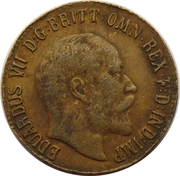

Introduction about Eduardus VII
Eduardus VII, better known as King Edward VII, was one of the most important British and European monarchs, following the longest reigning British monarch, Queen Victoria. Although Edward VII’s reign was brief, his legacy and importance in the arenas of European politics and diplomacy and societal reform was and remains significant.
Edward VII is remembered as both a monarch and a highly skilled European diplomat of the era.
Eduardus VII’s Background
Eduardus VII was born as Prince Albert Edward on November 9, 1841, and was the first son of Queen Victoria and Prince Albert. As the first in line to the British throne, his upbringing was highly controlled and disciplined.
Eduardus’s upbringing was very restricted, as his mother, Queen Victoria and his father, Prince Albert were very protective and restrained him from partaking in any of his royal responsibilities. Eduardus VII developed an interest in culture and social activities and left the British Isles to travel internationally.
Due to his upbringing, Queen Victoria’s perspective and values were very different from those of her son, Eduardus VII and this was significant in the later years when he ascended to the British throne.
Becoming King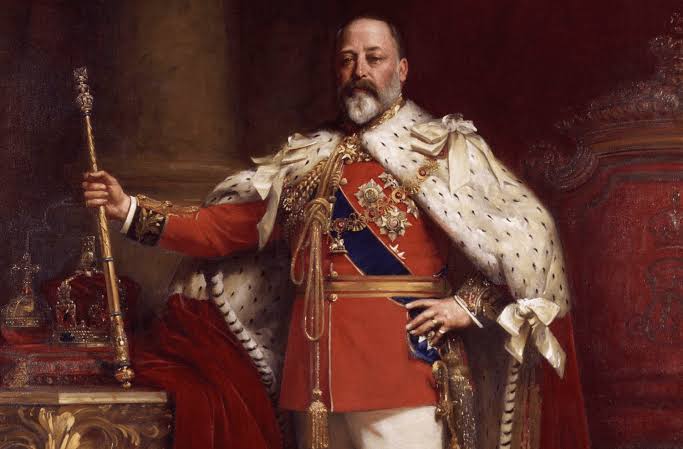
The ascension of eduardus vii to the throne following Queen Victoria’s death in 1901 caused the end of the long Victorian era. His Coronation began the Edwardian era, which was filled with social changes and modernizations and new Political climate shifts.
When he became King, Britain was one of the most powerful Empires in the world. However, Europe was becoming more and more filled with complex Political situations, especially with the rising tensions of the larger Empires.
The leadership of his mother was much more of a reserved and traditional style compared to eduardus vii. His style was more publicly social and diplomatic. For example, he had more of a tendency to communicate with Empires and Leaders of different Nations.
Reforms and Leadership Style
While eduardus vii did not really control from a position of executive Political leadership, he still had great influence on the reforms and the style of governance.
He was a supporter of the changes to modernize the Monarchy and helped change the public perception of the Royal Family. The Monarchy became much more socially engaged and accessible.
He also had great influence in the leadership style to:
Encourage and engage in diplomacy as opposed to conflict.
Strengthen Relationships across the Empire.
Support modernization of the Royal Traditions.
Encouragement of social and cultural engagement.
His Leadership style and personality arrived at the resolution of many strained relations of many Nations.
European Influence and Diplomacy
One of the most significant impacts eduardus vii had is the influence, and role of, European diplomacy. Due to his extensive work to better relations of the major Powers in Europe he was often given the title of the “Peacemaker King”
The kings of France and Russia were among those with whom he developed personally close ties. These associations played a most beneficial role in calming the atmosphere and in promoting diplomatic arrangements, such as the Entente Cordiale, between Britain and France.
While these moves did not deter subsequent events, such as the First World War, they were of great significance in molding the framework of alliances and the development of international collaboration in the Europe of the early 20th century.
The reign of Eduardus VII was also a time of considerable social change. It was the Edwardian era, a time of prosperity, a period of elegant fashions and of a flourishing culture, especially among the upper classes.
During this era:
The Arts and Architecture prospered
Styles of Fashion, refined and elegant, flourished
Society became more publicly active and engaged
There was a burgeoning interest and further advancement in Technology
The king, himself, an ardent patron of social occasions, was largely responsible for the prevailing social and cultural atmosphere.
Despite Eduardus VII’s popularity, there were a number of issues he was faced with during his reign. In Europe, there was growing instability, with shifting alliances and increasing social disparities.
Eduardus VII’s role was more diplomatic, and though he did not have direct influence on the policies, he did support modernization. His influence was such that he shaped public opinion.
These highlights of his contributions list his impact on:
Promoting international relations
Updating the regal family’s public relations
Promoting cultural and social progress
Designing 20th century European pacts
His reign, although brief, marked the Victorian to modern British metamorphosis.
Conclusion
King Edward VII’s importance as a historical figure is significant as his influence went beyond the typical scope of monarchy. Not only did he continue to afford Royal Family tradition the right of modern adaptability and cross-national relations, he, as a monarch, was one of the first modern Royal Family cross-national relations monarchs.
He was instrumental in the evolution and pace of the international community, which drives society towards a new era signficantly more differentiated and diverse in character. His legacy was beyond the traditional military engagement and diplomacy of monarchs.