
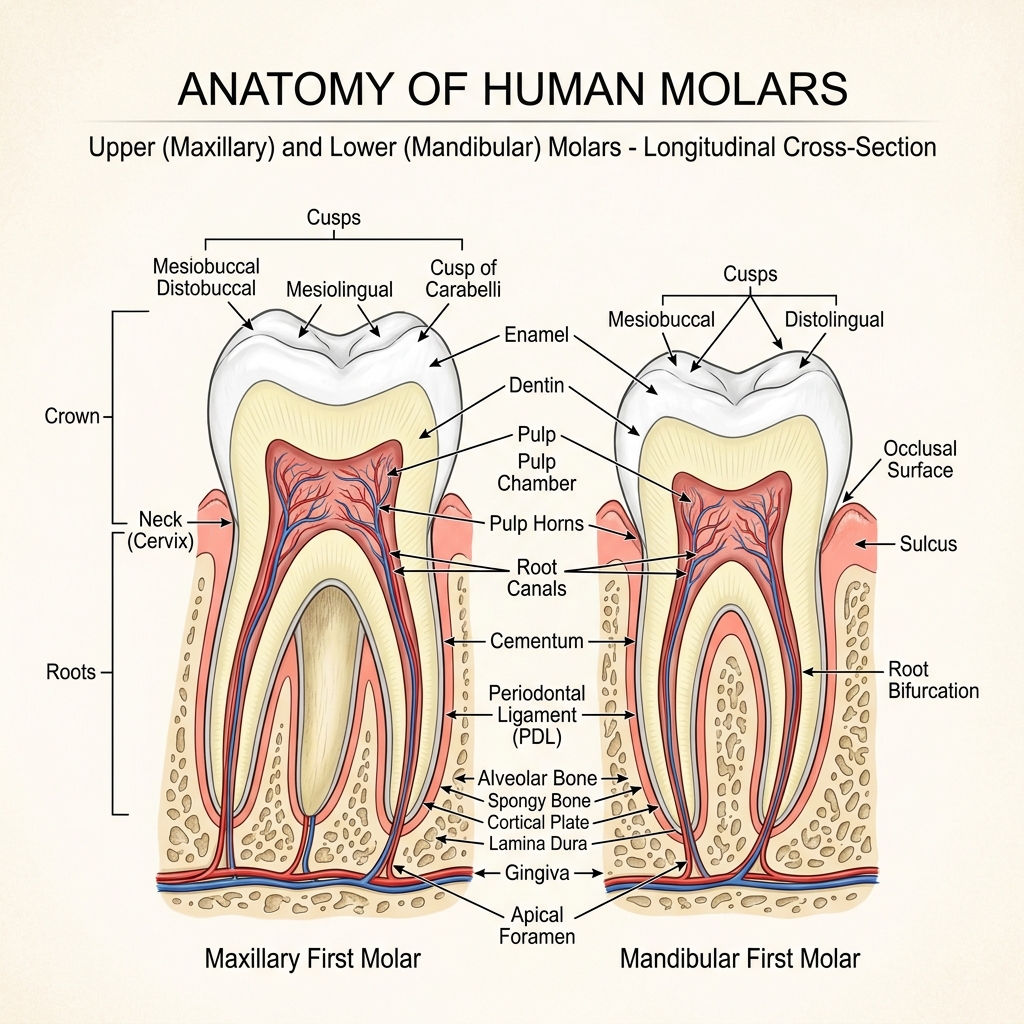

When people picture oral health, they usually picture people with pretty, bright front teeth and a pristine smile. However, the silent workers of the mouth are, in actuality, the molars. Located in the back, these wide, flat teeth do most of the day-to-day functioning. From chewing foods to supporting strength in the jaw, molers are essential in order to sustain the health of the mouth.
- What Are molars?
- There are three categories of molars:
- The Role of molars
- Issues with molars
- Cavities
- Fractured Teeth
- Gum Disease
- Wisdom Tooth Issues
- Keeping your molars Healthy
- Proper Brushing
- Floss Regularly
- Eat Less Sugary Foods
- Make Regular Dental Visits a Habit
- Consider Dental Sealants
- Signs of Trouble for your molars
- Motility of Health pertaining to molars
- Final thoughts
Interestingly, while molars are undeniably important, most of the general public neglects the care of their molars until they get symptoms of pain and/or discomfort. Knowing what molers do and how to protect them is key in order to prevent potentially severe oral health complications in the long run.
What Are molars?
The largest teeth in the mouth are the back teeth, the molars. In adulthood, you have twelve molars, which includes the wisdom teeth. In childhood, you have eight primary molers, which are replaced by permanent teeth.
The molars are designed with large surfaces in order to grind and crush food to make the process of digestion as a whole increasingly efficient. Unlike the front teeth that have surfaces that help to cut and slice food, molers have surfaces with broad sections that help to break down foods that are tough.
There are three categories of molars:
First molars– They usually show up first as the first permanent teeth to arrive in childhood.
Second molars– They show up later in the process of the teenage years.
Third molars (Wisdom Teeth) – molers typically emerge between the ages of 17 and 25.
When fully grown, each type of molar works symbiotically to assist with aligned jaw position and help with the chewing process.
The Role of molars
molars are not just useful for mastication; they are involved in many functions associated with your comfort and health.
1. Improved Digestion
The first step to digestion is chewing. molers pulverize food. Inadequate chewing may result in a stressed digestive system and uncomfortable digestive system problems.
2. Structural Support For Jaws
molars are responsible for the structural integrity of the jaw. Lack of molers causes molar atrophy and may change the contours of the face as a consequence.
3. Enhanced Speech
Many people are unaware of the role of teeth in speech. In conjunction with molers, the tongue is able to exert the necessary force to produce sound.
4. Symmetrical Bite
Loss of molars leads to a symmetrical bite due to the unrestricted movement of the lateral teeth.
Issues with molars
Because they bear pressure during mastication and have deep grooves, molers are prone to many dental problems.
Cavities
molars are among the first teeth to become carious. If cleaning is inadequate, food and bacteria become impacted in the grooves.
Fractured Teeth
molars are among the first teeth to break after an injury. They may also break due to bruxism. Even the smallest of cracks may result in pain and sensitivity.
Gum Disease
Back teeth are often the hardest to clean, which makes them susceptible to plaque, infections, and other health concerns.
Wisdom Tooth Issues
Wisdom teeth often grow in the wrong way or even become impacted. This can cause painful swelling, a crowded mouth, and jaw problems. For this reason, it is common for dentists to suggest their complete removal.
Keeping your molars Healthy
Keeping your molars healthy is not as complicated as some may believe. It usually just requires a few small habits.
Proper Brushing
Be sure to brush your teeth at least two times per day, and consider investing in toothpaste with fluoride added. As molers in the back of the mouth are the easiest to neglect while brushing, consider spending a little extra time cleaning them.
Floss Regularly
Cleaning between the teeth is often neglected. This is the role of floss. It, literally, removes the food that is stuck between your back teeth that toothbrush can’t reach.
Eat Less Sugary Foods
Not only are sugary foods and drinks poor for your overall health, they also feed the bacteria that cause cavities. Less sugar can strengthen your molars.
Make Regular Dental Visits a Habit
It is important to consistently visit your dentist. These appointments will help detect smaller issues before they turn into much bigger problems.
Consider Dental Sealants
Dental sealants are thin coatings placed on molers to help avoid decay, and are usually used on a patient that is younger.
Signs of Trouble for your molars
Besides the reasons listed above, there are plenty of other situations that should cause you to notify your dentist of concerns. These include:
A persistent pain of the tooth
An unusual sensitivity to hot or cold foods.
Swollen gums located near your molers
Difficulty with chewing food.
An unrelenting bad breath that never goes away.
Cracks or holes located in the teeth.
Many times, a decayed molar can be treated by simple means, and in turn, prevent a much bigger, more complicated and advanced procedure down the road.
Motility of Health pertaining to molars
Oral and general health are directly linked. Infected or damaged molers can lead to symptoms and complications outside the mouth, such as infections and inflammation, and can also make it hard to eat healthy food.
molars that are healthy help with healthy nutrition. People can eat healthy food with unhealthy things. People eat healthy foods, usually about, fruit, vegetables and protein are all hard to eat healthy foods.
Final thoughts
molers are some of the most important teeth in the human mouth. They support teeth, law strength, jaw strength and balance in the mouth. Because they are hard workers, they also have to be cared for.
By eating healthy food, having good mouth hygiene, and going to the mouth docter to check regularly, you can have healthy molers with no cost on your money or mouth for years. Taking care of your good healthy mouth right now can help you be healthy and not care about expensive mouth treatments and issues for the rest of your life.