
Introduction Tả Ao
Tả ao, a practice of traditional Vietnamese geomancy, dwells in the spaces between the hills, the rivers, the wind, and most importantly for the practice, the maps and measurements. To the practitioners, land is not dead space waiting to be filled; it is a living system of energy and flow, and most importantly, it has meaning.
The practice is often referred to as the art of “reading the land.” It fuses observation and intuition with the wisdom of one’s culture. Practitioners of tả-ao are not interested in the domination of nature. The practice is the understanding and the listening of nature. Terrain speaks through its shape, balance, and direction, and practitioners of tả ao are there to listen.
The Origins of Tả Ao
The practice of tả ao is part Vietnamese feng shui (phong thủy) and part ancient Chinese geomancy. The system is a product of both the ancient Chinese culture and the Vietnamese culture.
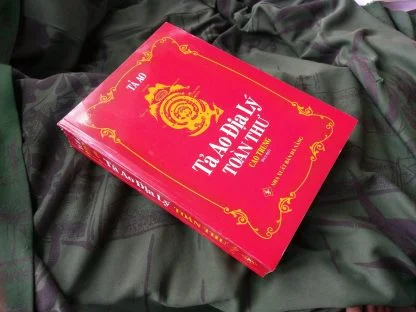
The legendary character Tả-Ao is said to be a geomancy master who distinguished himself from the other geomancy practitioners and began to popularize the art in Vietnam. Today the name of the character is synonymous with the art of land reading.
In traditional Vietnamese society, the practice of tả-ao was used as a rational tool that assisted the placement and construction of homes, burial grounds, and natural places of worship in order to enhance the coexistence of the Vietnamese people and nature.
What Does Tả Ao Really Mean?
Tả ao is the practice of understanding the flow of the energy system of the Vietnamese landscape. It is the interpreting of the landforms. Practitioners see the mountains, the rivers, the valleys, and the wind and how they pattern the kinetic system of the energy of the landscape.
There is beauty in simplicity. Life in aligned land is balanced. Land out of balance or disrupted can lead to an imbalance in human life.
There is no randomness in nature in tả-ao. Everything complements and is interrelated. The curves in nature such as rivers and hill slopes are part of nature’s design.
Deciphering the Landscape
In tả ao, landscapes are read. Mountains can serve as protective, enclosing forms, while rivers can represent a variety of movement and flow. Everything can be read—from the direction of winds to the locations of water, and even the forms of surrounding land.
Gentle, enclosing terrain can be interpreted as supportive and stable. Land that is exposed, or that supports harsh winds and isolated forms, can be interpreted as discordant and less harmonious.
tả ao is capable of reading land in ways that can almost be expressed as poetic. It creates space for meaning.
Energy in Tả Ao
The notion of energy in tả-ao is the movement of life force (qi), which is believed to flow through land the same way blood does through a body.
Tả ao places the highest emphasis on the flow of energy. Land can appear beautiful and still be unbalanced, but the most beautiful land is most balanced.
Practical Applications in Traditional Life
Tả ao defined rural life in Vietnam for centuries. Villages were arranged to realize geomantic principles of protection, prosperity, and harmony.
To defend against bad influences, favorable directional placement of houses combined with the placement of hills or trees as a barrier.
Some tả ao elements still appear today in rural architectural and spatial designs, thanks to its strong influence.
The Human Connection to Nature
One of the most important ideas of tả ao is the perception of the inseparability of man and nature. This view respects the natural landscape and the interdependence of human activity and the natural environment.
tả ao advocates for a position of humility with respect to the natural order of the land. This view protects the land’s inherent intelligence.
Symbolism and Interpretation
Tả ao is systemically flexible. For example, a curved river may be interpreted to symbolize gentleness and flow and a jagged mountain ridge strength or protection.
The interpretation of tả ao is neither fixed nor systematic. It is a synthesis and a flexible framework of experience, tradition, and intuition.
T a ao is a philosophy, an aesthetic, and a flexible framework of observation.
Modern Relevance of T a ao
In much of the contemporary world, t a ao resides in the realm of cultural studies as opposed to land practices. Despite this, many of its ideas and principles are astonishingly relevant.
As societies today retrofit urban planning in order to balance design and sustainability with the environment, the tenets of tả ao emphasize living in partnership with nature rather than mastering it.
Through its attention to balance, flow, and systems, tả ao coincides with the ideas of modern design and integrated living.
Conclusion
Tả ao provides a world view of harmony and connectivity, as well as an ancient practice. It helps us see that land is not an absence of space, but rather a living system filled with energetic patterns and meaningful connections.
From the mountains and rivers to the villages and cities, tả ao teaches that every environment communicates. Those who are able to interpret its messages understand the relationships between humanity and the world we occupy.
In a world that is so fast moving that we often forget to observe our surroundings, tả ao helps us to pay the right amount of attention to the land.