
How to Take brufen for toothache: Quick Relief, Correct Usage and Safety Precautions.
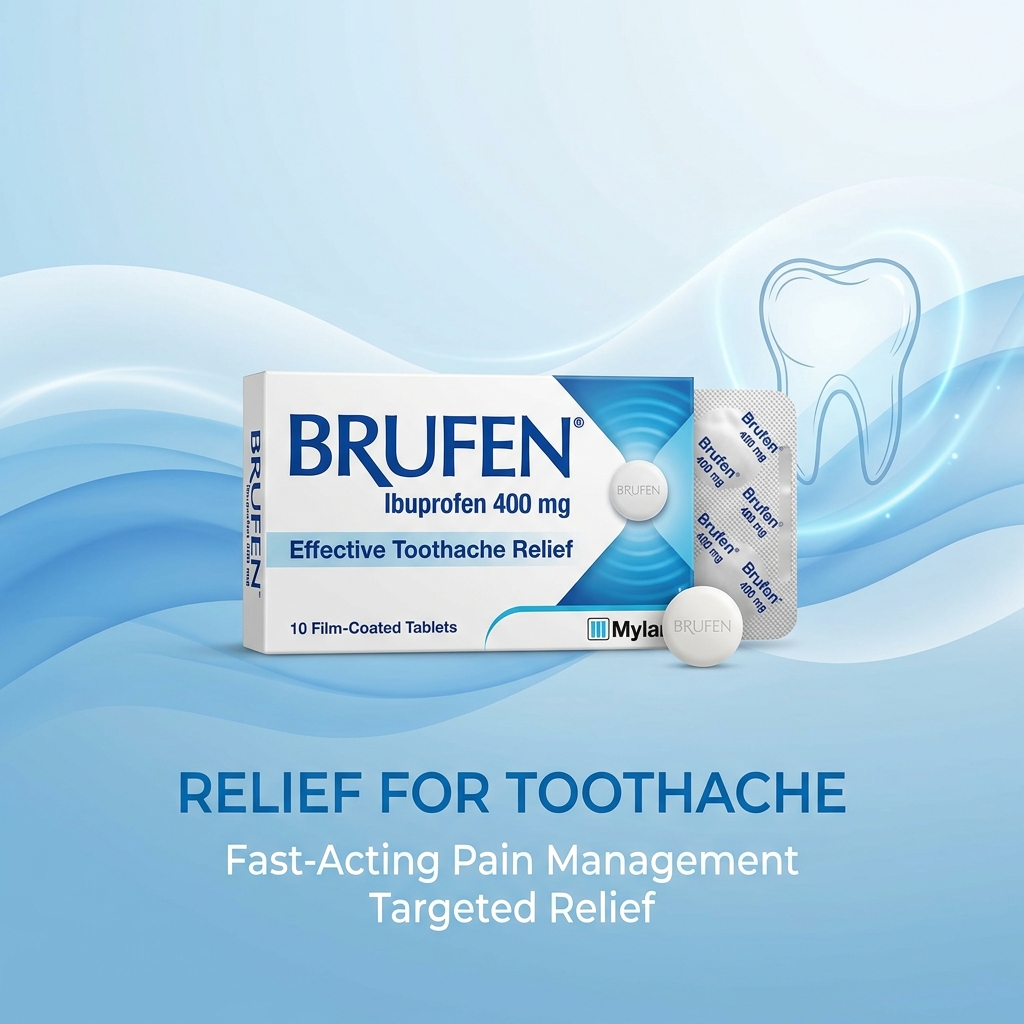
A toothache can strike at the drop of a hat and make the tiniest of tasks seem like a challenge. If you experience a sudden, severe tooth or gum pain while eating, sleeping, or talking, it could mean it’s time to visit the dentist. Many people look for rapid pain relief and one of the common pain relievers is Brufen. Having a little knowledge about how brufen for toothache operates, helps you use it properly and safely while awaiting proper dental treatment.
- How to Take brufen for toothache: Quick Relief, Correct Usage and Safety Precautions.
- Recommended Dosage of Brufen
- The use of Brufen for tooth pain is effective in the following cases:
- The possible side effects of Brufen.
- With whom should Brufen not be given?
- Home remedies for toothache relief.
- Practise good oral hygiene.
- Final Thoughts
Brufen is a popular pain relief medication with ibuprofen, a non-steroidal anti-inflammatory drug (NSAID). Very often used to alleviate pain, inflammation and fever. The use of ibuprofen based medicines is often recommended by dentists because toothaches are almost always associated with swelling or inflammation around the tooth or gums.
The reasons why brufen for toothache can help with toothache.Why Brufen can aid toothache.
Toothache can result from cavity in the teeth, gum infections, problems with the wisdom teeth, cracked teeth or dental abscess. Inflammation around the affected area often exacerbates pain. The active ingredient in Brufen blocks chemicals in the body known as prostaglandins; prostaglandins cause pain and swelling.
Many people experience relief from brufen for toothache taken for toothache in 30 to 60 minutes. The medicine will not only help to relieve pain but may also help to minimize gum or jaw swelling. This makes it one of the most sought after temporary remedies for dental discomfort.
Recommended Dosage of Brufen
Dosages vary by patient and pain severity and age. Typically adults receive 200mg to 400mg as required every 6-8 hours. It is very important to note that, unless prescribed otherwise by a health care provider, no more than the recommended daily dose should be used.
It’s best to take brufen for toothache after eating or drinking milk to prevent stomach irritation. Drinking lots of water after ingesting the medication can also help prevent stomach upset.
Only use brufen for toothache when supervised and in accordance with medical advice or guidance. Please read the label carefully before use.
The use of Brufen for tooth pain is effective in the following cases:
Brufen can be used to treat a variety of different kinds of dental pain, such as:
Tooth decay pain
Gum inflammation
Wisdom tooth discomfort
Mild dental infections
After-dental procedures pain
This swelling of the jaw is due to tooth-related issues.
While the brufen for toothache may alleviate the symptoms, it does not cure the underlying cause of the problem. If the pain does not go away within one or two days, it’s important to see a dentist.
The possible side effects of Brufen.
As with all medicines, some people may have side effects from brufen for toothache. Common side effects are:
Stomach pain
Heartburn
Nausea
Dizziness
Mild headache
Sometimes allergic reactions, bleeding of the stomach or difficulty in breathing can happen. People who have asthma, stomach ulcers, kidney disease or heart disease should check with a doctor before taking Brufen.
Also, try to not use brufen for toothache with alcohol and some medicines, unless they are suggested by a health care professional.
With whom should Brufen not be given?
Although brufen for toothache is extensively used, it is not recommended for everyone. Individuals should not or should not use it by the following:
Women who are pregnant without a doctor’s recommendation
People who are allergic to ibuprofen or to the nonsteroidal anti-inflammatory drugs (NSAIDs) in general
Patients who have severe kidney or liver disease
Those who have had an ulcer in the stomach should be extra cautious.
Individuals who are on a blood thinner should avoid this.
If in doubt ask a doctor or pharmacist before taking Brufen.
Home remedies for toothache relief.
While taking brufen for toothache, there are a few home remedies that can help relieve discomfort temporarily:
Rinse with Warm Salt Water
Salty water can help to lessen bacteria and help to soothe swollen gums.
Use a Cold Compress to control swelling.
Apply a cold pack to the cheek to help numb and diminish swelling.
Don’t eat Very Hot or Very Cold Foods.
Teeth that are sensitive can be very responsive to hot or cold foods.
Practise good oral hygiene.
Brushing and flossing gently can take away trapped food particles that can cause pain.
It could be helpful to try these in conjunction with brufen for toothache, but of course, the first thing you need is to get professional dental treatment.
There are times when it may be necessary to come up with a dentist as soon as possible.
Never use painkillers as a substitute for dental care. If you have the following symptoms, please consult your dentist immediately:
Swelling in the face or gums that is very severe.
Fever and toothache
Trouble swallowing or breathing.
Gums that bleed and don’t heal
A long-lasting pain that lasts for several days!
These symptoms could be a sign of a serious infection and something should be done about it right away.
Final Thoughts
Dental pain and inflammation can be alleviated for a short period of time by using brufen for toothache. Many people find it effective and it is often suggested for mild to moderate tooth discomfort. But, brufen for toothache only treats the symptoms and not the actual dental problem.
Dental care is needed to achieve long-lasting relief. If the toothache persists or worsens, visit the dentist as soon as possible. Caring for oral health at an early stage can help to avoid more severe oral health issues and maintain a healthy and pain-free smile.