
Dynamic Bandwidth Allocation
With the digitization of societies, networks are being flooded by requests made by users and devices. Traditional bandwidth management handles user requests with an automated, more or less, predictable, bandwidth allocation. This does not work anymore with the changing dynamics of networks. To address this issue, modern systems are equipped with the capability for dynamic bandwidth allocation.
- Dynamic Bandwidth Allocation
- What Is Dynamic Bandwidth Allocation?
- Some of the main objectives of dynamic bandwidth allocation are:
- Dynamic Bandwidth Allocation Processes
- Why Dynamic Bandwidth Allocation is Critical
- Reduced Network Congestion
- Support of Multiple Applications
- Telecommunications Networks
- Satellite Communication
- What are the Challenges of Dynamic Bandwidth Allocation?
- What is the Future of Dynamic Bandwidth Allocation?
- Conclusion
Dynamic bandwidth allocation works around the idea of an automated, real-time, flexible distribution of available bandwidth.
With permanent allocation of fixed resources, traditional systems also risk underutilization of available bandwidth. In contrast, modern systems adjust bandwidth control based on user and application demands.
This leads to an improvement in the distribution of resources and decreases congestion.
What Is Dynamic Bandwidth Allocation?
Dynamic bandwidth allocation is the ability of a network to reallocate bandwidth of its own accord based on specific, real-time network conditions.
In the case of traditional bandwidth management systems, fixed portions of bandwidth are allocated, even in instances where there is demand for more bandwidth in other portions (sub-networks). This results in the underutilization of available bandwidth and poor performance.
Continuous monitoring of dynamic bandwidth allocation systems allows for optimal allocation of the network’s bandwidth.
Some of the main objectives of dynamic bandwidth allocation are:
Maximizing resource allocation
Increasing performance
Diminished network congestion
Positive impacts to the end user
Adaptable bandwidth control
Dynamic Bandwidth Allocation Processes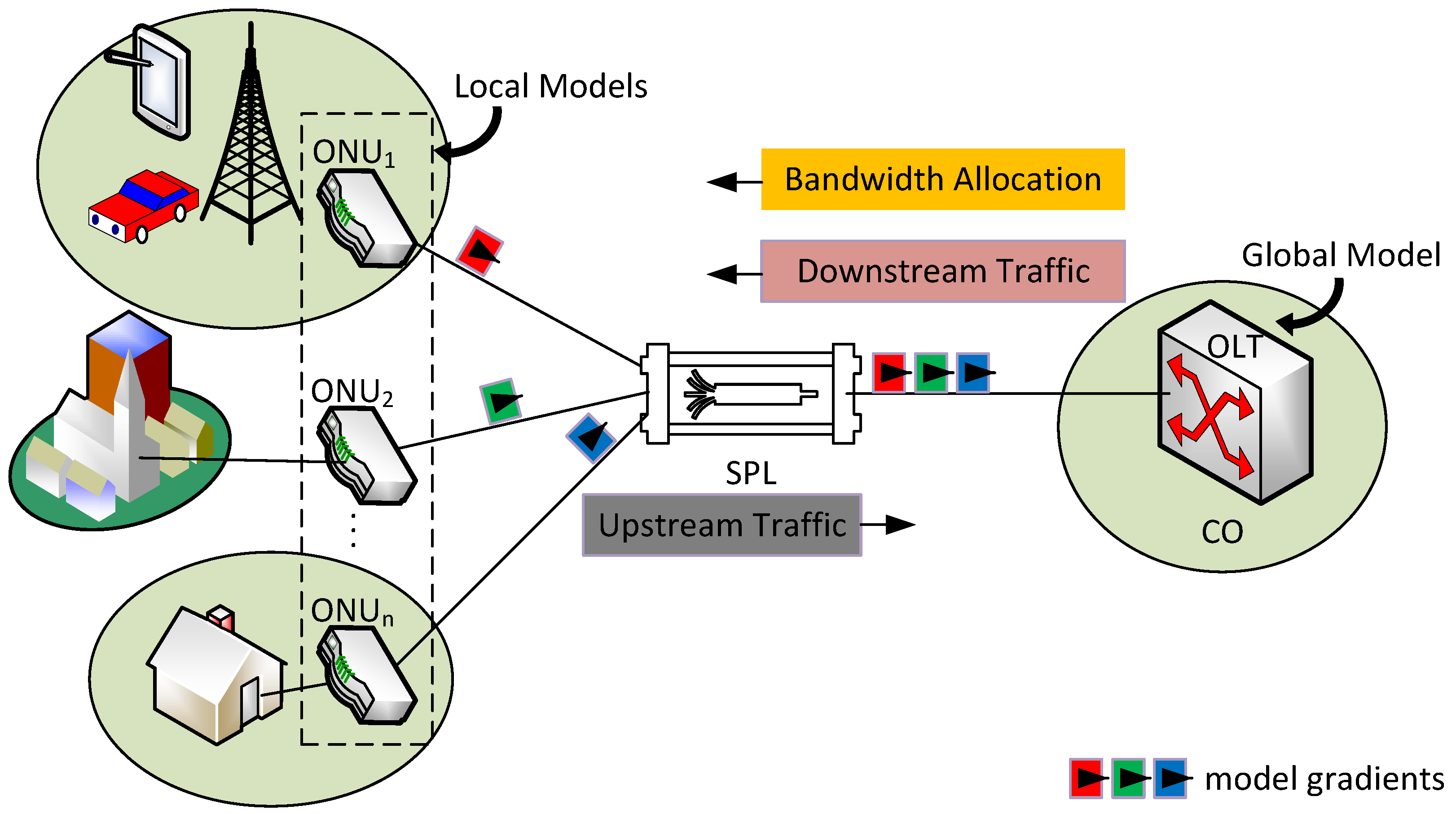
Dynamic bandwidth allocation involves a triad of continual observation, assessment, and automatic workflow modification.
It encompasses the following steps:
Controlling Traffic
The system perpetually tracks activities within a network, ranges of data, and the requirements of different levels of network congestion.
Assessment of Needs
Bandwidth requirements of end users, devices, and tasks are determined by sophisticated algorithms.
Resource Distribution
Bandwidth is distributed based on need and priority.
Modified Distribution
Bandwidth distribution is adjusted based on the current state of the network.
While a video conference is taking place, smooth communication is ensured by the system automatically providing an adequate level of bandwidth. After the video conference, the bandwidth is reallocated to the network users.
Why Dynamic Bandwidth Allocation is Critical
With the rise of digital services, the need for dynamic bandwidth allocation has grown.
Current networks accommodate:
Streaming services
Cloud based services
Gaming services
Remote work and collaboration tools
IoT devices
Applications
All of these services require different levels of available bandwidth. Dynamic allocation allows networks to improve the level of service.
Advantages of Dynamic Bandwidth Allocation
Dynamic bandwidth allocation has many benefits.
Network Resource Optimization
Dynamic bandwidth allocation avoids the wastage of bandwidth by reallocating underutilized bandwidth. This helps improve the overall effectiveness of the network.
Reduced Network Congestion
Too much competing network traffic for a limited bandwidth causes network congestion.
Dynamic bandwidth allocation helps with congestion by adjusting how bandwidth is allocated based on network traffic.
The result is:
Faster data transfer.
Less delay.
More consistent connections.
Improved User Experience
Dynamic-bandwidth-allocation helps provide smoother experiences with the performance of the internet. Users expect smooth performance with video calls, streaming, and internet applications.
The network service is more satisfactory by maintaining a higher quality service of network traffic that is more important.
Cost Optimization
Bandwidth that is allocated in a more satisfactory way also means that infrastructure costs are more optimized.
Excessive peak capacity does not need to be purchased if bandwidth is allocated in a more optimal way.
Support of Multiple Applications
Dynamic bandwidth allocation is also helpful because several applications can run simultaneously. Numerous applications can also run on the same network.
Dynamic-bandwidth-allocation makes it possible that resources are allocated to a service depending on its importance.
Dynamic bandwidth allocation has a great many applications.
Telecommunications Networks
Network congestion is even more of a problem with a great many customers and service providers in telecommunications.
Dynamic bandwidth allocation helps telecommunications optimize:
Mobile networks.
Broadband services.
Fiber communication systems.
Cloud Computation
Cloud systems need a great deal of bandwidth and a dynamic allocation of network resources.
Cloud systems require dynamic-bandwidth-allocation to provide cloud applications the bandwidth they need.
Data Centers
Traffic transfer to a server is especially a problem for large data centers.
Dynamic bandwidth allocation helps support reliable performance by balancing server traffic.
Internet of Things (IoT)
The connected devices of an IoT network can number in the thousands, even millions.
Though dynamic bandwidth allocation helps balance the communication of even more devices by adjusting the resources based on the activity level.
Satellite Communication
Satellite networks have limited bandwidth.
Dynamic-bandwidth-allocation enables efficient bandwidth distribution.
Dynamic-Bandwidth-Allocation in Optical Networks
Dynamic-bandwidth-allocation is mainly applied in optical communication.
Optical networks (fiber-based included) need efficient management because they carry huge data.
PON (Passive Optical Network) is one of the technologies that employs dynamic-bandwidth-allocation to offer available bandwidth to different users.
This helps the companies to provide customers with better internet with the least management of network resources.
What are the Challenges of Dynamic Bandwidth Allocation?
Dynamic Bandwidth Allocation has certain challenges despite the advantages.
Complex Management
For the intelligent allocation systems to be effective, the network and software infrastructure must be very advanced.
Real-Time Decision Making
The system must be able to allocate bandwidth promptly to avoid inefficiency.
Security Challenges
Systems must protect network management from unauthorized accesses and attacks.
Initial Implementation Cost
Organizations must invest and upgrade their technology.
What is the Future of Dynamic Bandwidth Allocation?
The significance of dynamic-bandwidth-allocation will grow with the advancement of networks.
Future developments may include:
AI-based allocation
Machine learning optimization
Integration of 5G and 6G networks
Automated network management
AI systems will allow networks to determine and allocate bandwidth before congestion is experienced.
Dynamic Bandwidth Allocation and Smart Networks
Resource flexibility is a backbone of smart networks.
Management flexibility of dynamic-bandwidth-allocation facilitates the development of intelligent communication systems that adapt automatically.
This positions it as an important component of future digital foundations.
Conclusion
Dynamic bandwidth allocation is an important technology that enables contemporary networks to optimize resource management. Through the automation of bandwidth changes in relation to fluctuations in demand, dynamic bandwidth allocation enhances performance, minimizes congestion, and improves the overall experience.
Dynamic-bandwidth-allocation is important to the development of advanced communication systems in all sectors—telecommunications, cloud computing, Internet of Things (IoT) frameworks, and optical networks.
This technology also holds a key position in facilitating the effective and intelligent networks of the future.