

Introduction
Every vehicle needs a dependable braking system for safety. Drivers need to be able control speed, stop, and adapt to sudden changes in road conditions. This need has kept braking systems in constant evolution. The drum braking system has been a reliable and widely-utilized system for over one hundred years.
- Introduction
- History of Drum Brakes
- The Design and Components of Drum Brakes
- The Operation of Drum Brakes
- They Have a Lower Manufacturing Cost
- Protection from External Forces
- Less Efficient Braking Systems
- Comparison of Drum and Disc Brakes
- Drum Brake Maintenance
- Drum Brake Concerns
- Current Use of Drum Brakes
- Future of Drum Brakes
- Conclusion
Drum braking systems have a dependable design, are durable, and cost-effective. Because of these reasons, they have been utilized in cars, motorcycles, trucks, and even industrial vehicles. Modern cars primarily utilize disc brakes, but drum brakes are still important in commercial applications and rear-wheel braking systems.
This guide includes everything from the history of drum brakes to their design, operation, benefits, and even how they are maintained.
What Are Drum Brakes?
Drum brakes are a system that used friction between a brake shoe and a revolving drum to stop or slow a vehicle.
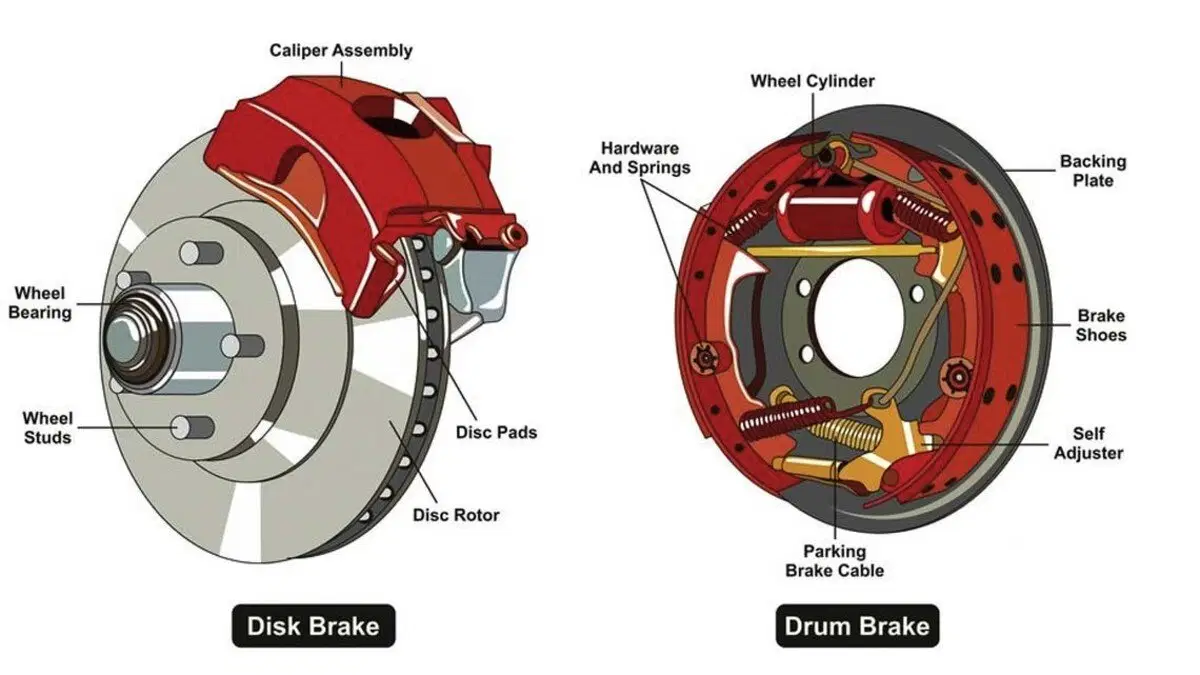
Drum brakes work inside of a circular drum that is attached to the wheel, unlike disc brakes that work by having a brake pad press against a rotating disc.
The main function of a drum brake system is to slow a vehicle by converting its kinetic energy to heat energy via friction.
History of Drum Brakes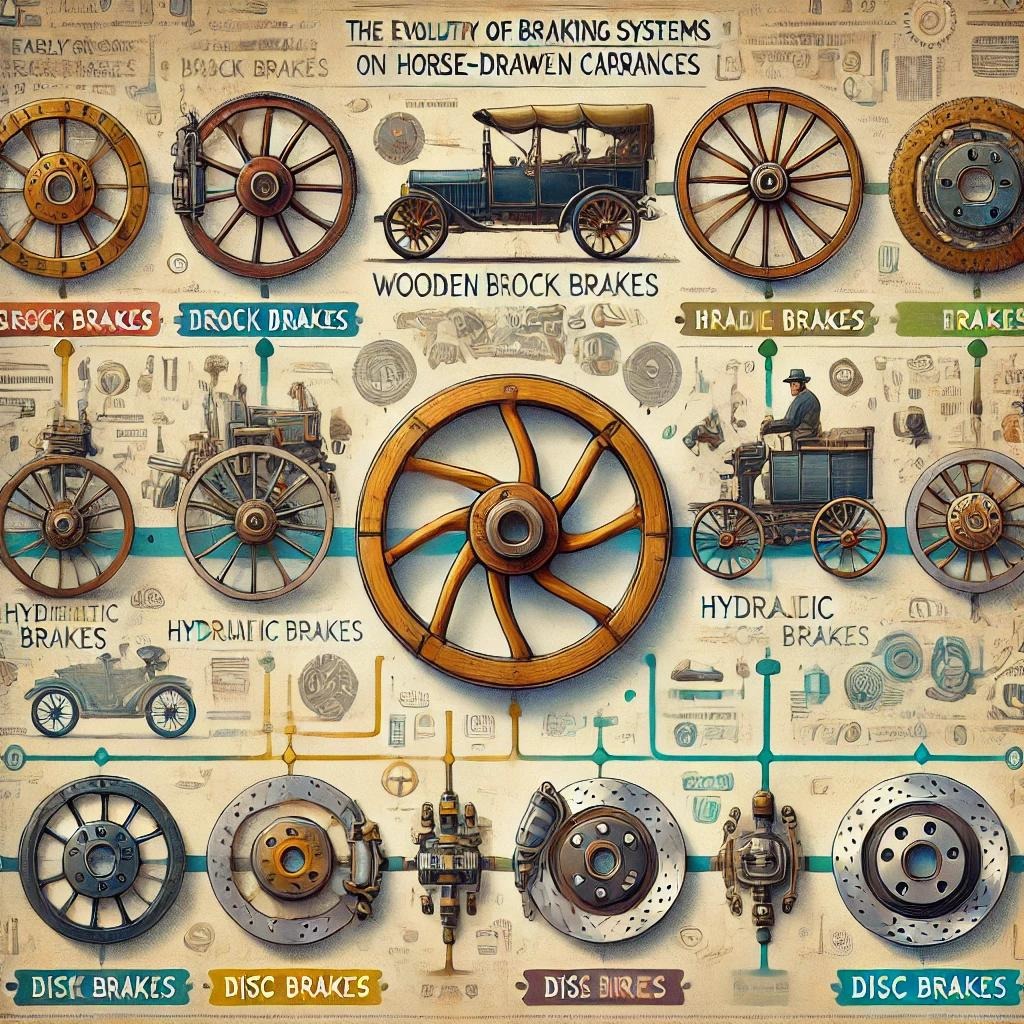
Drum brakes originated during the early development of the automobile.
As the engines in early vehicles grew more powerful and as transport began to move faster, a reliable braking system became necessary. To meet this need, engineers created drum brakes as a more powerful and easier to manufacture solution.
The standard braking system for most vehicles throughout the majority of the 20th century was drum brakes, and for good reason. They were:
Cheaper to produce
Dependable
Simple to upkeep
Able to be produced en masse
Even after disc brakes were developed, drum brakes remained useful for particular applications.
The Design and Components of Drum Brakes
Several components work together in the design of a drum brake system to create the force needed to stop a vehicle.
The Brake Drum
Attached to the wheel, the brake drum is a circular metal component that, as the wheel turns, also turns. When it is time to brake, the friction needed is created on the slow to fast rotating surface of the brake drum.
The Brake Shoe
The brake shoe is a metal component that has a coating of friction material.
When the brake pedal is pressed, brake shoes move outwards to contact the surface of the brake drum.
The Wheel Cylinder
The Wheel Cylinder is responsible for pushing brake shoes toward the brake drum.
Return Springs
These springs return the brake shoes to their resting state when the braking pressure is released.
The Adjuster Mechanism
As friction material wears overtime, the adjuster works to keep the distance between the brake shoes and drum.
The Operation of Drum Brakes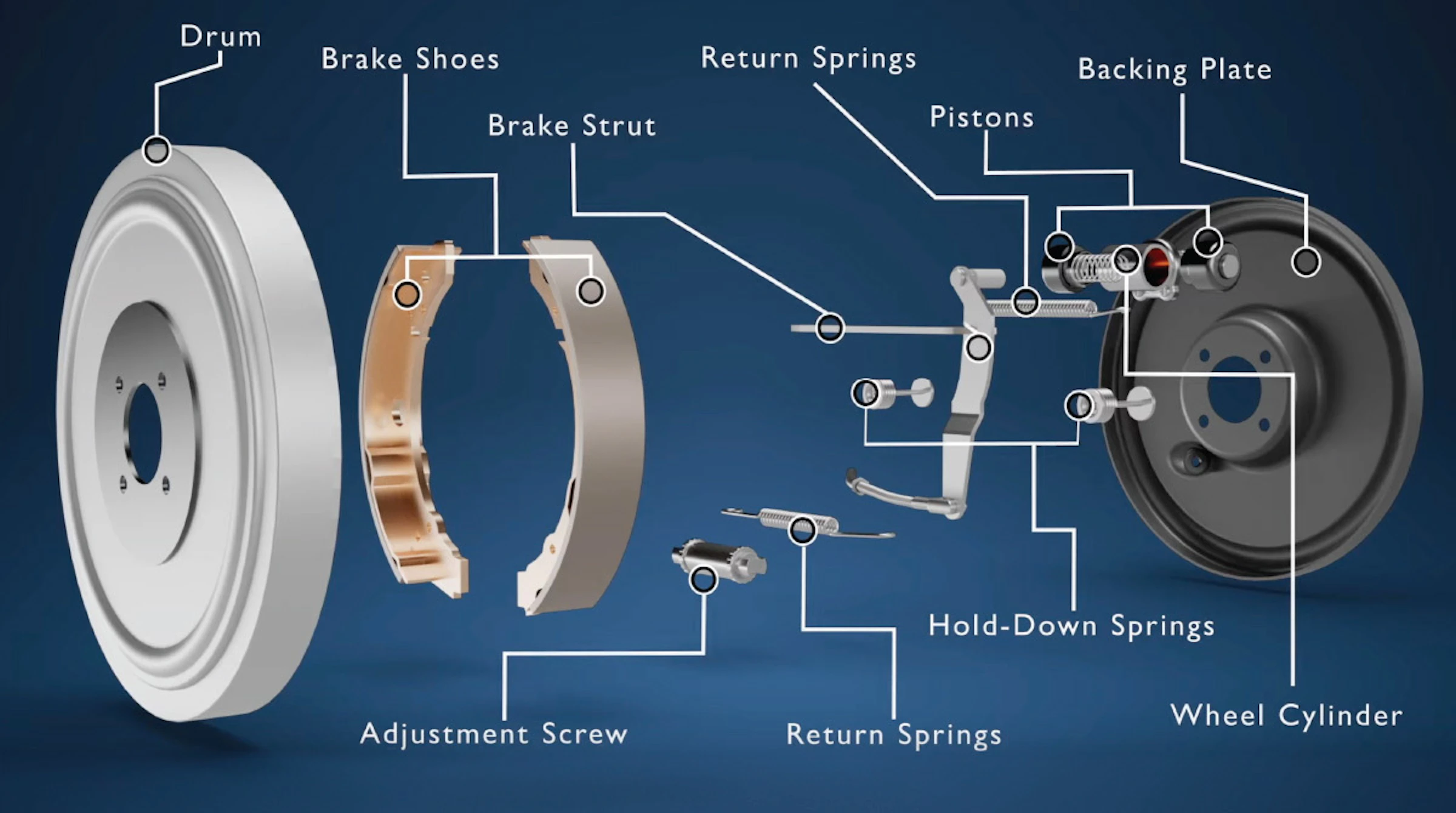
Drum Brakes use a combination of friction and hydraulic pressure to function.
The sequence of events takes place in this way. For every action, there is an equal and opposite reaction. That is the law of nature. The driver pushes the brake pedal. Hydraulic fluid travels to the wheel cylinder, and the pressure is transferred. The wheel cylinder pushes the outer brake shoes. When the brake shoes are pushed outward, they press against the rotating drum. That creates friction, which slows down the rotation of the drum and the wheel. At that point, the vehicle slows down or comes to a complete stop. If the brake pedal is pushed back, the return springs pull the brake shoes back to create space, and the drum rotates freely once again.
Although disc brakes are the most commonly used braking systems, drum-brakes are still helpful in certain cases.
They Have a Lower Manufacturing Cost
The design of drum brakes is more cost-effective, and they are more economical for most vehicles.
More Braking Force
Drum brake systems have a design, which offers more braking force, and this is more evident at lower speeds.
Longer Lasting Components
The brake shoes are more likely to last longer because of the protection offered by the drum housing.
Built-In Parking Brake Functionality
The drum brake systems utilize a design that offers more seamless integration for mechanical parking braking systems.
Protection from External Forces
The enclosed design of the drum brake systems ensures that the internal components of the braking system are protected from dirt and road debris. The same cannot be said for the disc brake systems.
Although these use cases illustrate why drum-brakes are still helpful, they help illustrate their shortcomings as well.
Less Efficient Braking Systems
Compared to disc braking systems, drum-brakes offer poorer performance braking systems during higher speeds, and when rapid braking is required, they lag in performance.
More Difficult to Maintain
The higher manufacturing costs of disc brakes are offset by the lower maintenance costs. The opposite is true for drum brakes.
Comparison of Drum and Disc Brakes
Drum and disc brakes are often compared within the automotive context.
Drum Brakes
Drum brakes are less expensive to manufacture.
They are adequate for average driving.
Drum brakes are primarily used for rear wheels.
Drum brakes have an enclosed design.
Disc Brakes
Disc brakes manage heat better than drum-brakes.
Disc brakes better handle the demands of prolonged and repeated severe braking.
They are primarily used for front wheels.
Disc brakes allow for easier visual inspections.
Most modern vehicles use a combination of the two systems, having disc brakes at the front and drum-brakes at the rear.
Drum Brake Maintenance
Drum brakes can benefit from routine maintenance to help sustain their performance.
The maintenance can be broken down into a few main categories.
Inspections
Mechanics should look for worn or damaged brake shoes, drums, springs, and cylinders.
Cleaning
The accumulations of dust and debris can impact performance and operating efficiency.
Adjustment
The distance between the brake shoes and the drum should be properly adjusted.
Worn or Damaged Component Replacement
Shoes and any other damaged components should be repaired or replaced.
Drum Brake Concerns
Potential issues with drum brakes can be signaled through some common symptoms.
Unsatisfactory brake operation or performance may include:
Squeaks or grinding sounds
Braking performance degradation
Pulling the vehicle to one side
Excessive travel of the brake pedal
Vibration
All of those symptoms can be severe safety issues.
Current Use of Drum Brakes
Disc brakes have largely replaced drum brakes in many passenger vehicles, but drum-brakes can still be found in.
Economical vehicles
Rear-wheel braking systems
Trucks
Trailers
Motorcycles
Industrial equipment
Due to their cost and their continued reliability, they can still be found in many of the vehicles that constitute the majority of all transportation systems.
Future of Drum Brakes
Drum brakes demonstrate that even with a rapidly changing automotive landscape, some designs stand the test of time. Drum brakes have stood the test of time because they have designs that stand the test of time. Innovative design will lead to improvements in
Brake design will lead to enhanced:
Heat management
Lightweight design
Durability
Design process efficiency
There remains a place for drum brakes in the industry — and while they won’t become a preferred style across all autos, there are certainly areas that drum-brakes address effectively.
Conclusion
Drum brakes have earned their place in the exhaustive history of:
Automobiles
Drum brakes
Reliability
Affordability
Effectiveness
Drum brakes have designs that simplify complicated systems. Recently advantages in technology have started to displace drum-brakes – but issues in incorporating new braking technologies means that drum-brakes remain a preferred technology for many use case scenarios. Drum-brakes are the most cost effective technology, and with thoughtful design and maintenance, drum brakes can remain operational for the entire life of the automobile.