
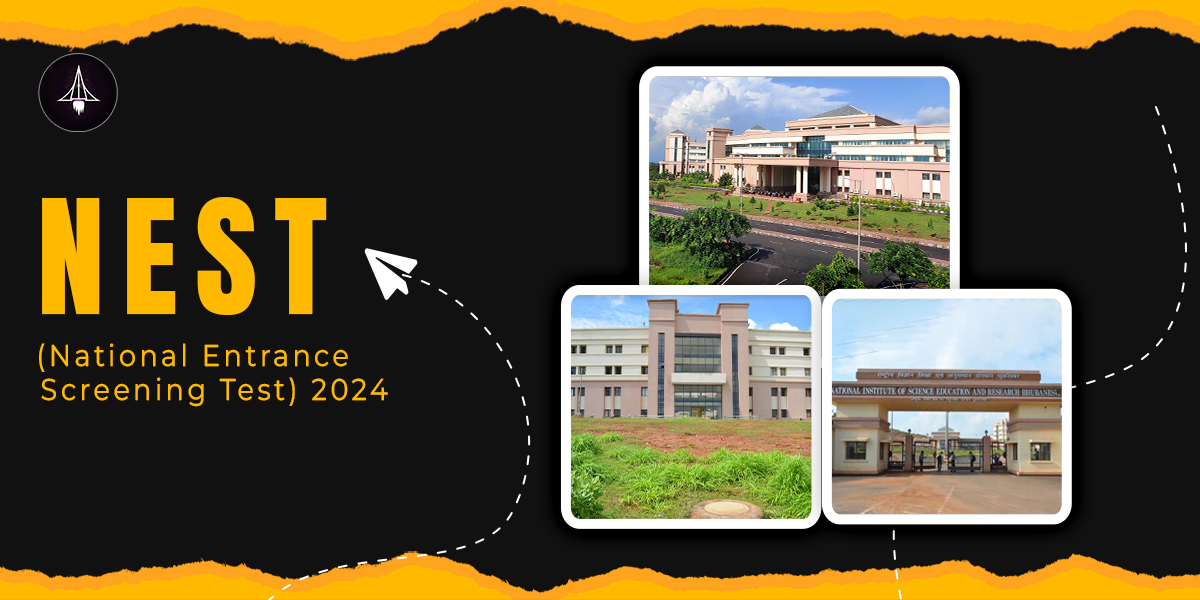

National Entrance Screening Test: An Aspirants Guide
The competitive exam system is the country’s first major benchmark which helps aspiring students gain access to the next tier of educational institutions. One of these significant competitive examinations is the National Entrance Screening Test.
It is important to learn about the National Entrance Screening Test if aspiring students want to understand key components such as the exam structure and eligibility criteria. From there, they can develop an effective pathway to fulfilling their career goals.
What is the National Entrance Screening Test?
The National Entrance Screening Test is an Indian competitive examination that aspiring students of basic sciences use as an admission ticket to a number of prestigious institutes. The National Entrance Screening Test is the first step on the path to a career in basic sciences.
The exam’s purpose is to assess the analytical and problem-solving skills of students who have an interest and understanding of the components of basic sciences, including physics, chemistry, mathematics, and biology.
Many students learn through rote memory. This is a weakness in the education system. Thankfully, the National Entrance Screening Test is focused on assessing students’ logical and conceptual understanding.
Exam Purpose
The national entrance screening test helps to develop a nation of young scientists. In conjunction with this ideal, it aims to do the following:
Recognize gifted young students
Stimulate scientific thinking
Provide pathways to quality scientific education
Create pathways to careers in scientific research
Given that it is a merit and skills-based selection process, the exam endeavors to develop creative scientists and innovators.
Who Can Apply?
Only students of a particular age and education will be able to write the national entrance screening test. These criteria will maybe vary a little every year, but will generally be that:
Students must have completed or be appearing for Class 12
Students must have a good academic record in the sciences
There will be no specific age criteria established, though guidance may be provided
Students must get the latest eligibility details from official announcements before applying.
Exam Structure
Students must know the design and structure of the national entrance screening test to prepare for it. The exam will mainly consist of MCQs covering all core sciences.
The exam will have testing items from the following major disciplines:
Physics
Chemistry
Mathematics
Biology (for life sciences)
The design and structure of the exam will focus on speed and accuracy; however, clear concepts must be articulated and logically applied as this will be the focus of many of the questions.
You have to do a lot to be successful in the national entrance screening test. Here are a few tips:
1. Know your syllabus
You will begin your preparation by knowing your syllabus. You will be concentrating on the important topics from the sciences in Classes 11 and 12.
2. Build Strong Concepts
Problems that rely on the application of a concept cannot be solved by rote memorization. Strengthening your understanding of the concept is key.
3. Practice Regularly
To successfully perform in an examination, you must be able to solve problems quickly and accurately. Take mock tests and solve the problems from previous years’ question papers.
4. Manage Time Effectively
Time management is important in both the written examination and the preparation leading up to it. Practice solving problems in an allotted time.
5. Revise Consistently
Consistent revision reinforces the retention of concepts and boosts confidence leading up to the examination.
Common Challenges Faced by Aspirants
Some challenges faced by students preparing for the national entrance screening test include:
Difficulty balancing time for multiple subjects
Not enough guidance
Stress and pressure
Poor time management
Discipline, regular practice, and a positive mindset can help address these challenges.
Importance of the Exam in Career Building
The national entrance screening test is vital for a research-based career. It provides a pathway to prestigious institutions and research programs.
The students who are successful in this examination can pursue:
A career in scientific research
Engineering and technology
Teaching
Further studies of physics, chemistry, and biology
Long-term academic and professional goals can be achieved as a result of this examination.
Conclusion
The national entrance screening test is the examination for a fulfilling career in science and research. Students who have a strong foundation of concepts and who practice frequently will be successful in this highly competitive examination.
In National Entrance Screening Test: A Complete Guide for Aspirants, we have analyzed what the exam entails, why it exists, and how to prepare for it to help students realize their potential and approach the test with ease.
There is no doubt that the primary driving forces behind this exam success are hard work, interest, and a solid grounding in the field of science.